
Why is my mutton tough?
Short answer: tough mutton is almost always the wrong heat for the cut. Cover it, add hot water and simmer on the lowest flame until a piece pulls apart with a spoon.
Updated
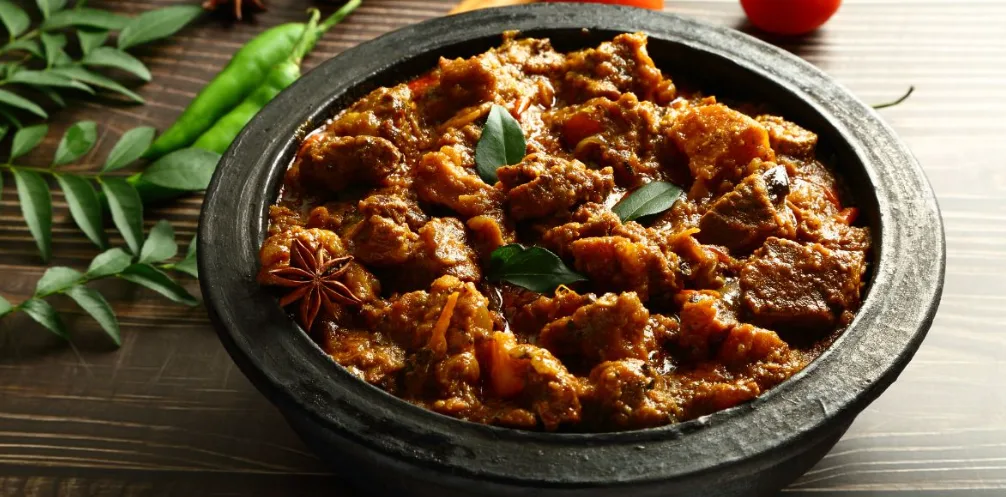
Find your fix
01What went wrong?
02Where are you right now?
Still cooking: Fix it now
Already cooked: Save what is left
Next time: Next time
Chewy · Still cooking
Add hot water to just below the meat, cover, and simmer on the lowest flame. The surface should barely move. Check a piece with a spoon after 30 minutes.
Chewy · Already cooked
Put the pieces back in their gravy with a splash of hot water, cover, and warm gently until they soften. Do not boil it. Small, shredded pieces also work well in rolls and rice dishes.
Chewy · Next time
Cook it low and slow, covered, until a piece pulls apart with a spoon. For anything that simmers, choose bone-in curry cut.
Dry · Still cooking
Take it off the heat. Stir in a quarter cup of hot water or stock, cover, and let it rest for 10 minutes so the pieces take the moisture back.
Dry · Already cooked
Shred the meat and fold it into a fresh, loose gravy, or use it in rolls, biryani layers or a quick fry. Moisture is what you are adding back.
Dry · Next time
Keep boneless and leg for marinated roasts, tikka and kebabs, and cook them for less time. Switch to bone-in curry cut when the dish simmers.
Still hard · Still cooking
Check the lid fits, add hot water if the pot is nearly dry, and cut the largest pieces smaller. Then cook covered on low heat, or give it 20 minutes in a pressure cooker.
Still hard · Already cooked
Chop the hardest pieces small and return them to the gravy, covered, for another 20 minutes. Serve the softer pieces now and the rest later.
Still hard · Next time
Give tight cuts such as ribs and chops more time in a covered pot, or use a pressure cooker. Cut pieces to similar sizes so they finish together.
Why it happened
Chewy
The connective tissue has not broken down yet. A hard boil tightens the muscle fibres before the collagen can soften, so the meat is cooked through but springy.
Dry
Lean meat, or meat cooked too long with too little liquid. Leg and boneless pieces have little fat, so they dry out when cooked hard or uncovered.
Still hard
Tight cuts, large pieces, or a pot that is losing steam. Ribs and chops need long, moist heat, and an open pot or a loose lid slows the softening.
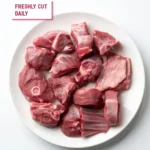
Bone-in pieces carry the connective tissue that turns tender with slow, moist cooking.
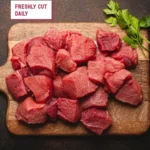
Boneless cooks faster and suits marinated dishes such as tikka, pepper fry and biryani.
Bone-in pieces suit a pressure cooker or a long covered simmer.
Common causes
01The cut does not suit the method+
Lean cuts such as leg dry out if rushed, and tight cuts such as ribs need time. Each cut has a method it was made for.
Fix: Use bone-in curry cut or ribs and chops for anything that simmers.
02Heat too high, time too short+
A hard boil tightens the muscle fibres. Meat cooked hard and briefly is chewy even when it is cooked through.
Fix: Drop to the lowest flame once it boils. The surface should barely move.
03Not enough time for the connective tissue+
Collagen softens into gelatine only with sustained moist heat. Pieces on the bone usually need longer than you expect.
Fix: Cook until a piece pulls apart with a spoon, not by the clock.
04No marinade, or salt added late+
Salt and an acid such as yogurt or lemon, given an hour or more, season the meat through and loosen its surface.
Fix: Marinate for an hour at least, overnight for roasts and kebabs.
05Cooked straight from the fridge+
Cold meat in a hot pan seizes and cooks unevenly, so some pieces finish before others have started.
Fix: Take the meat out 30 minutes before it goes in.
Match the cut to the method
Most tough mutton starts at the counter, not the stove.
| Cut | Best for | Less suited |
|---|---|---|
| Curry cut, bone-in | Curry, braise, pressure cook | Dry roast |
| Boneless | Marinated roast, tikka, kebab | Rushed curry |
| Ribs and chops | Marinated grill, slow braise | Short simmer |
| Mince | Quick cooking, kebab, kofta | Long dry heat |
Best cut for slow cooking
The cut that forgives a long, covered simmer.
Questions
Can I fix mutton that is already cooked and still tough?+
Yes. Add hot water and cook it again, low and covered, until a piece pulls apart with a spoon. Do not boil it hard.
Does adding salt early make mutton tough?+
No. Salt before cooking seasons the meat through and helps it hold moisture. The myth comes from gravy that was over-salted as it reduced.
Why is mutton tougher than chicken?+
Mutton comes from fully grown animals, with more connective tissue and harder-working muscle. It needs longer, moister cooking to soften.