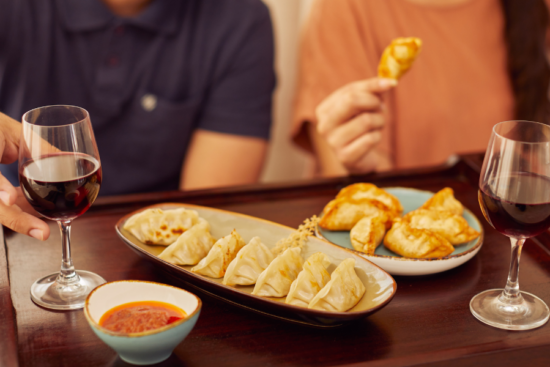

Here’s a familiar scenario: you cooked half a pack of Prasuma momos from Meatigo by Prasuma, the remaining ones went in the fridge, and two days later the reheated version came out rubbery, dry, or somehow flattened. You ate them anyway, but it wasn’t the same.
The momos didn’t fail you. Storage and reheating did.
Frozen momos are more forgiving than their reputation — they’re built to hold quality through freezing and cook reliably from frozen. But what happens between “out of the steamer” and “back in for round two” makes a real difference. Here’s the complete guide to doing it right.
Storing Unopened Packs
An unopened Prasuma momo pack from Meatigo by Prasuma is vacuum-sealed and should go straight into the freezer on arrival, unless you’re cooking it within the next 24 hours. Never leave it at room temperature or allow it to sit at the back of the fridge for days if you’re not cooking it soon.
In the freezer, an intact, sealed pack holds quality up to the printed best-before date — typically several weeks — provided the freezer temperature stays consistently at or below -18°C. Freezers that cycle significantly in temperature due to frequent opening or power fluctuations can cause partial thawing and refreezing, which degrades the wrapper texture gradually. A consistent, undisturbed spot on a freezer shelf is the right place for unopened packs.
Storing Leftover Cooked Momos
This is where most people make the mistake that creates disappointing reheat results.
Cooked momos left sitting out in a bowl develop a thin skin as they cool — the wrapper dries at the surface, the filling contracts slightly inward. Once this happens, reheating will harden the skin rather than revive it.
The correct approach: let cooked momos cool for no more than ten to fifteen minutes, then transfer to an airtight container. If stacking, place a lightly dampened piece of baking paper between layers to prevent sticking and to keep moisture in. Seal and refrigerate immediately. Consume within 48 hours.
That retained moisture is what gives you a revivable momo on reheating, rather than a tough, chewy one.
Try our Chilli Prawn Momos.
Storing a Half-Used Raw Pack
If you’ve opened a frozen pack and only cooked a portion of it, the remaining raw momos need to go back into the freezer promptly — not the fridge.
Press out as much air as possible from the open bag, seal tightly with a clip or by folding the pack over on itself several times, and return to the freezer immediately. Raw frozen momos placed in the fridge instead of the freezer deteriorate within 24 hours: the dough begins absorbing ambient moisture unevenly, making the wrapper sticky and prone to tearing during cooking.
Reheating: The Right Methods
The goal when reheating is to restore the momo to something genuinely close to its freshly cooked state — not merely to make it hot. The method determines whether that’s achievable.
Steaming is the best reheating method for previously steamed momos. Oil the steamer surface lightly, place momos without overcrowding, cover, and steam for 4–5 minutes. The wrapper reabsorbs moisture and turns supple again. The filling heats gently and doesn’t dry out. This is the closest a reheated momo will ever get to freshly cooked.
Pan-frying works particularly well for momos that have already been steamed once. The combination of oil and water creates the same steam-fry effect as first-time cooking — a crisped base with a revived, moist interior. Add a thin layer of oil to a non-stick pan, place momos flat-side down over medium heat, add a splash of water and cover for 3–4 minutes. The texture is actually better than steaming alone for a second serving.
The microwave is the last resort. If necessary, place momos on a plate, cover with a damp cloth or microwave-safe cover, and heat in 30-second bursts. Check after each burst — overheating makes the wrapper gummy and dries the filling simultaneously. It works in a genuine emergency. It should not be the default.
The Reheat Outcome You’re Trying to Avoid
The worst result — dry filling, hardened wrapper, general disappointment — almost always comes from two sources: storing cooked momos uncovered in the fridge, or reheating with completely dry heat.
Keep moisture involved at every stage — during storage and during reheating — and Meatigo by Prasuma’s Prasuma momos come back close to their original quality. The second serving doesn’t have to feel like a lesser version of the first. With the right handling, it very nearly isn’t.